Quick answer: Is peacock the national bird of India?
Yes, the peacock is the national bird of India. Specifically, it is the Indian peacock, known scientifically as Pavo cristatus, that holds this status. India officially declared the peacock its national bird on 1 February 1963, and it has remained the country's avian emblem ever since. So if you are looking for a straight yes or no, the answer is a firm yes.
Correct sentence in English (and natural alternatives)
The most standard, grammatically correct way to write this fact in English is: "The peacock is the national bird of India." That sentence is the one you will find on official government portals like Know India and MyGov India, and it is exactly what you should write in an exam or assignment.
A few natural variations you can use depending on context:
- The peacock is the national bird of India.
- The Indian peacock (Pavo cristatus) is the national bird of India.
- The peacock is the national bird of our country. (correct when writing as an Indian citizen)
- Is the peacock the national bird of India? Yes, it is.
- India's national bird is the peacock.
All of these are grammatically correct. The phrase "Peacock is the national bird of India" (without the article "The") is sometimes seen in informal writing or direct translations, and while most readers will understand it, the standard English form uses "The peacock" at the start of the sentence. In formal writing, always go with "The peacock is the national bird of India."
Hindi explanation: Why peacock is the national bird of India
If you need to explain this fact in Hindi, here is the correct statement and a short explanation you can use directly:
सही वाक्य: "मोर भारत का राष्ट्रीय पक्षी है।" (Mor Bharat ka rashtriya pakshi hai.) This translates directly as "The peacock is the national bird of India."
Hindi explanation (why the peacock was chosen): मोर को 1 फरवरी 1963 को भारत का राष्ट्रीय पक्षी घोषित किया गया था। मोर भारतीय संस्कृति, धर्म और परंपराओं से गहराई से जुड़ा हुआ है। यह हिंदू पौराणिक कथाओं में भगवान कार्तिकेय का वाहन है और भगवान कृष्ण के मुकुट में मोर पंख का विशेष स्थान है। इसकी सुंदरता, विशेषकर इसके रंग-बिरंगे पंख, इसे भारत की समृद्ध प्राकृतिक विरासत का प्रतीक बनाते हैं।
In plain English, that paragraph says: The peacock was declared India's national bird on 1 February 1963. It is deeply connected to Indian culture, religion, and tradition. It is the vehicle of Lord Kartikeya in Hindu mythology, and the peacock feather holds a special place in Lord Krishna's crown. Its beauty, especially its colourful feathers, makes it a symbol of India's rich natural heritage.
Grammar help: spotting the nouns in the sentence
A common school-level exercise asks you to identify or underline the nouns in the sentence "The peacock is the national bird of India." Here is a quick breakdown:
| Word | Part of Speech | Type of Noun |
|---|
| peacock | Noun (underline this) | Common noun |
| bird | Noun (underline this) | Common noun |
| India | Noun (underline this) | Proper noun |
So in the sentence "The peacock is the national bird of India," there are three nouns: peacock, bird, and India. If your exercise asks you to underline only the main subject noun, underline "peacock." If it asks you to underline all nouns, underline all three: peacock, bird, and India. "India" is a proper noun because it is the name of a specific country, while "peacock" and "bird" are common nouns.
The words "The," "is," "the," "national," and "of" are not nouns. "National" is an adjective describing the type of bird. "Is" is a verb. "The" and "of" are an article and a preposition respectively.
What "national bird" actually means, and why India picked the peacock
A national bird is an officially designated bird species chosen by a country to represent its identity, culture, or natural heritage. It is usually selected through a government decision and becomes part of a country's set of national symbols alongside the national flag, anthem, flower, and animal. India has several such symbols, and the peacock sits alongside the tiger (national animal) and the lotus (national flower) as part of this official group.
India chose the Indian peacock (Pavo cristatus) for very specific reasons. The bird is native to the Indian subcontinent, which means it is naturally found across India and is not an imported or exotic species. It has been woven into Indian art, literature, dance, and religion for thousands of years.
Cultural and religious roots
In Hindu mythology, the peacock is the vahana (vehicle or mount) of Lord Kartikeya, the god of war and son of Lord Shiva. Lord Krishna, one of the most widely worshipped deities in Hinduism, is almost always depicted wearing a peacock feather in his crown. This makes the peacock not just a beautiful bird but a sacred one with deep religious meaning for hundreds of millions of people.
Beyond religion, the peacock appears extensively in classical Indian dance forms like Bharatanatyam, in Mughal miniature paintings, and in traditional textiles and crafts. Its image is one that Indians across regions, languages, and communities instantly recognize and feel connected to.
Physical features that made it stand out
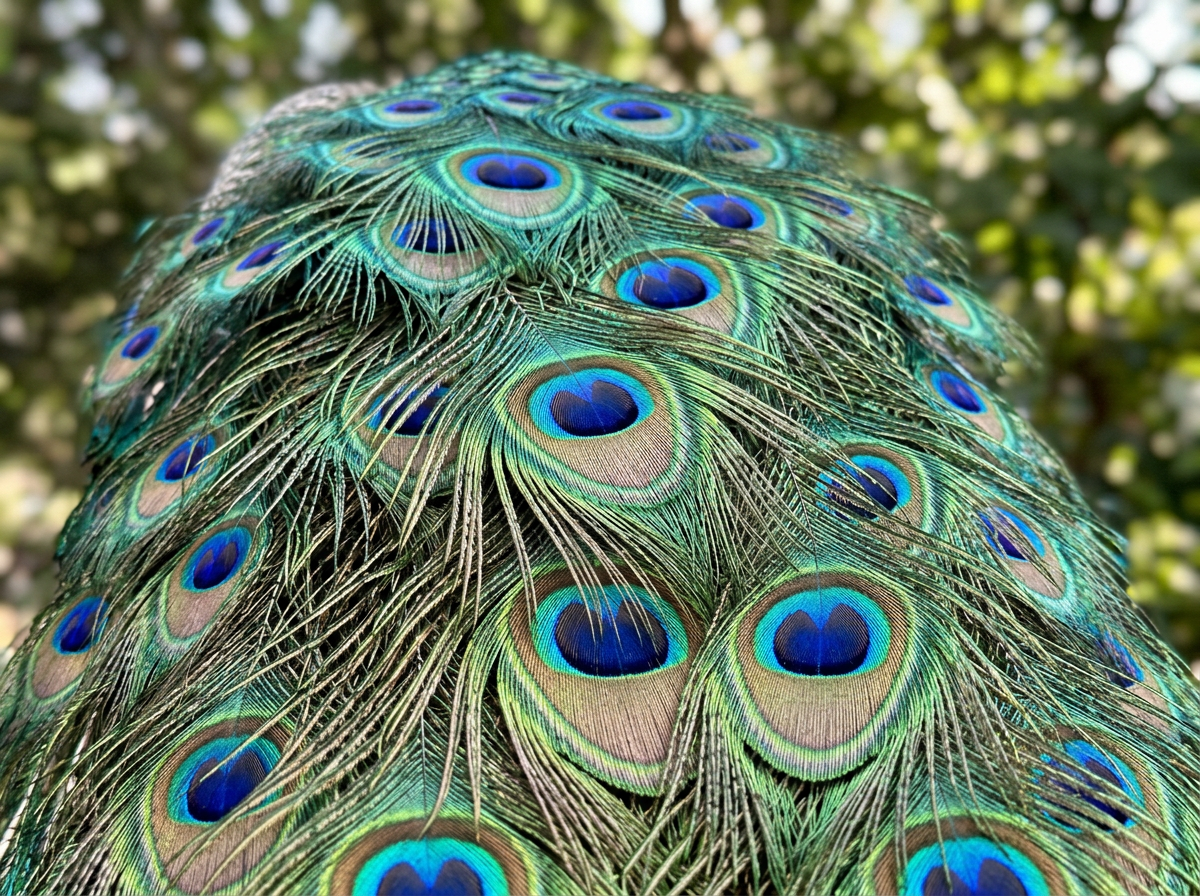
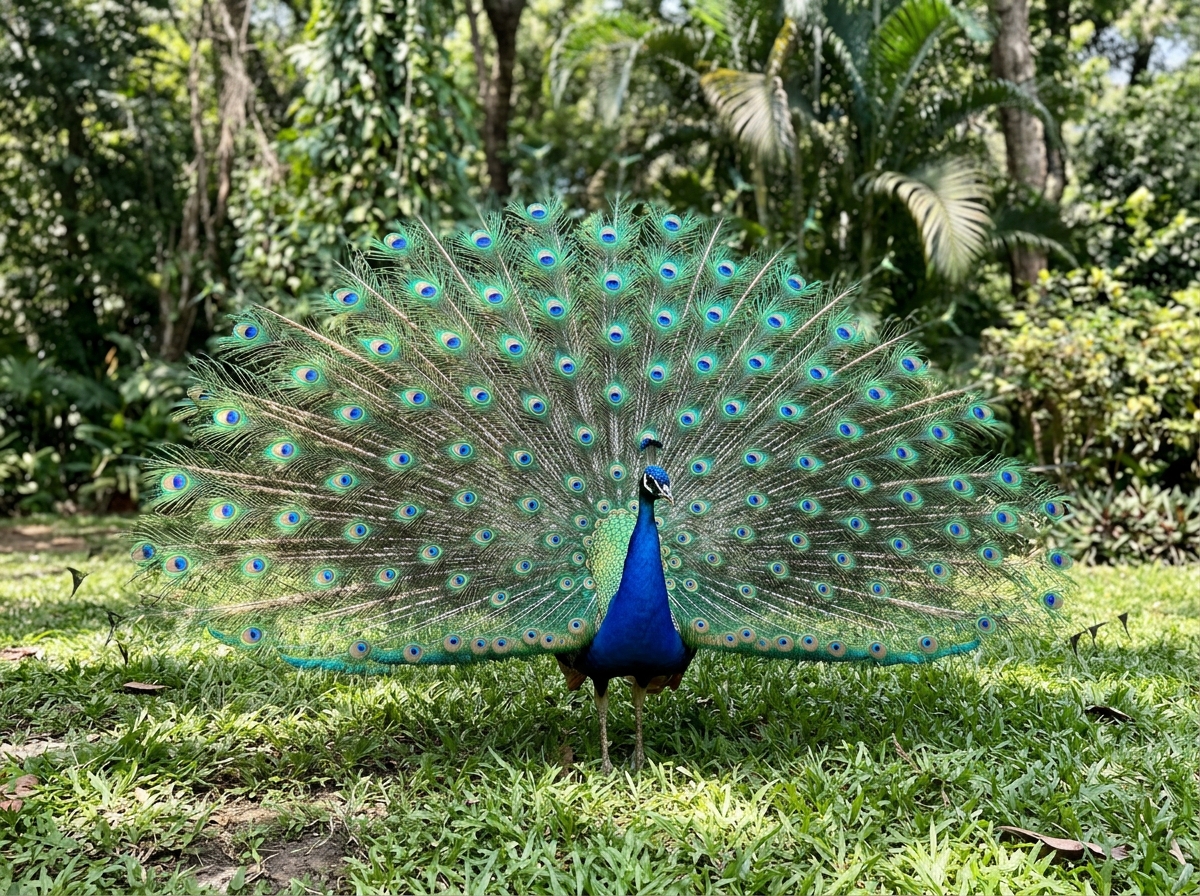
The Indian peacock is one of the most visually striking birds in the world. The male bird has an iridescent blue-green plumage and a spectacular tail (technically called a "train") made up of elongated upper tail-covert feathers decorated with eye-like patterns. When a male fans out this tail in a courtship display, it creates one of nature's most dramatic spectacles. This combination of beauty, cultural depth, and native status made it the natural choice as India's national bird.
The 1963 declaration
India formally declared the peacock its national bird on 1 February 1963. This came roughly 15 years after India's independence in 1947, during a period when the Indian government was formalizing many of the country's national symbols. The peacock's selection was widely supported because it was already deeply embedded in the national consciousness, so the formal declaration was almost a confirmation of something most Indians already felt to be true.
How this fits alongside other countries' national birds
India is not the only country whose national bird carries deep cultural weight. Myanmar also recognizes the grey peacock-pheasant as its national bird, and several other nations have chosen birds that are central to their cultural identity rather than simply their most common or rarest species. If you are researching this topic for a school project or quiz, it helps to understand that national bird choices are almost always a blend of ecological nativeness, cultural symbolism, and historical significance. country whose national bird is the peacock nyt mini
For comparison, green pheasant is the national bird of which country is the green pheasant, which is similarly a species native only to the Japanese archipelago and carries cultural significance in Japanese art and folklore. The logic behind Japan's choice echoes India's: a native bird, recognized across the culture, elevated to an official symbol. You can explore other countries' national bird selections on this site to see how those patterns repeat across the globe.
The key facts, all in one place
| Question | Answer |
|---|
| What is India's national bird? | The Indian peacock (Pavo cristatus) |
| When was the peacock declared national bird? | 1 February 1963 |
| Correct English sentence | The peacock is the national bird of India. |
| Correct Hindi sentence | मोर भारत का राष्ट्रीय पक्षी है। |
| Nouns in the sentence | peacock (common noun), bird (common noun), India (proper noun) |
| Why was it chosen? | Native to India, deep cultural and religious significance, iconic beauty |
If you are writing this fact for an exam, a quiz, or a school assignment, stick with the sentence "The peacock is the national bird of India" and you will always be correct. If you need the Hindi version, use "मोर भारत का राष्ट्रीय पक्षी है।" And if the exercise asks you to identify nouns, remember: peacock, bird, and India are your three nouns, with India being the proper noun of the group.