Japan's national bird: the green pheasant
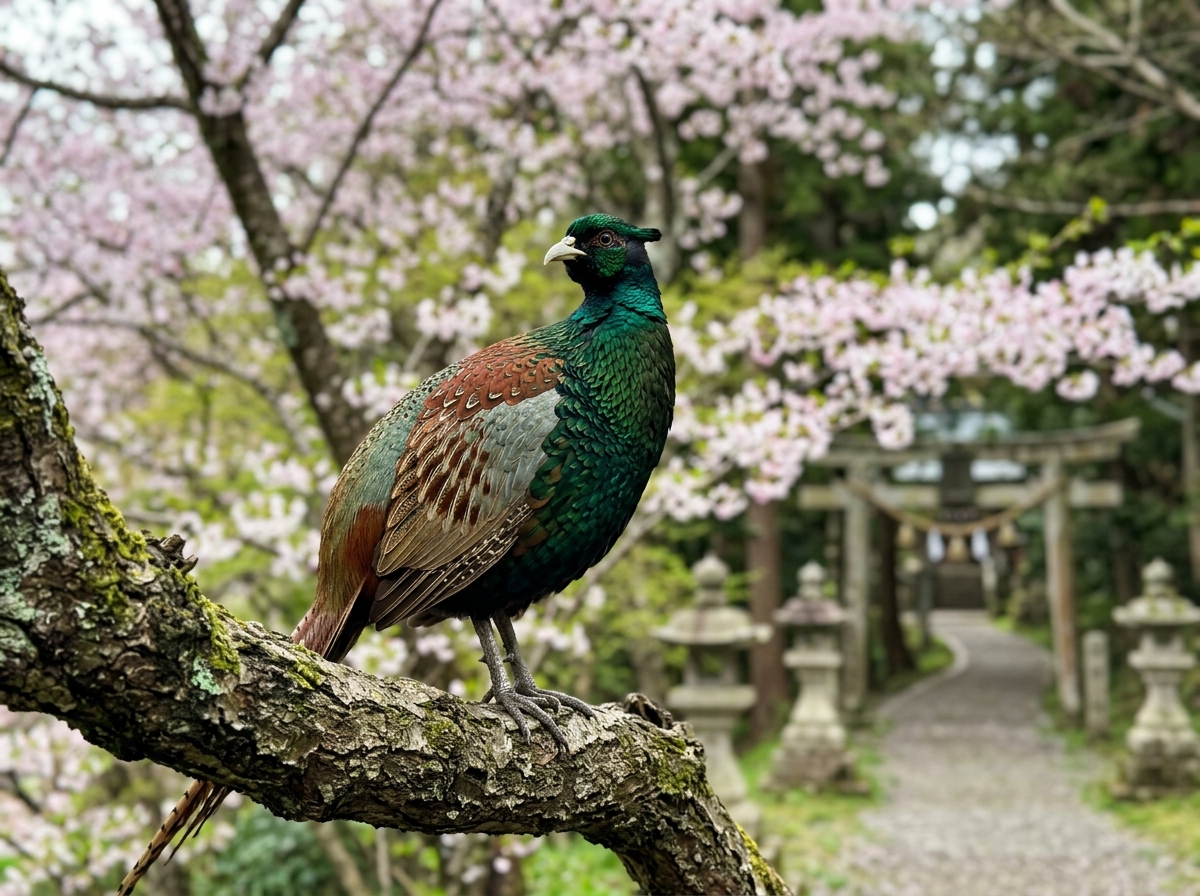
Japan's national bird is the green pheasant, known in Japanese as キジ (kiji, written with the kanji 雉)., known in Japanese as キジ (kiji, written with the kanji 雉). Its scientific name is Phasianus versicolor, and you'll also see it called the "Japanese green pheasant" to distinguish it from related species. If someone asks what Japan's national bird is, green pheasant is the answer you're looking for.
Official symbol or just widely accepted? Here's the honest answer
This is where things get a little nuanced, and it's worth being upfront about it. The green pheasant was declared Japan's national bird in 1947, but that declaration came from the Japanese Ornithological Society (日本鳥学会), a non-government scientific organization, not from a government law or official decree.
A May 2023 publication from the Government of Japan's own online portal (Highlighting Japan) confirms this directly: the national bird label for the kiji has never been officially designated by Japanese law. So while you'll see it called Japan's national bird in zoos, encyclopedias, news outlets like The Japan Times, and even on prefectural government websites like Gunma Prefecture's, that status is widely accepted convention rather than a legal designation.
For most practical purposes (school reports, trivia, general knowledge) this distinction doesn't change the answer. The green pheasant is what Japan calls its national bird, and that's universally recognized. But if you're writing something that requires precision, it's accurate to say it was "designated by the Japanese Ornithological Society in 1947" rather than "officially designated by the Japanese government."
Why the green pheasant represents Japan
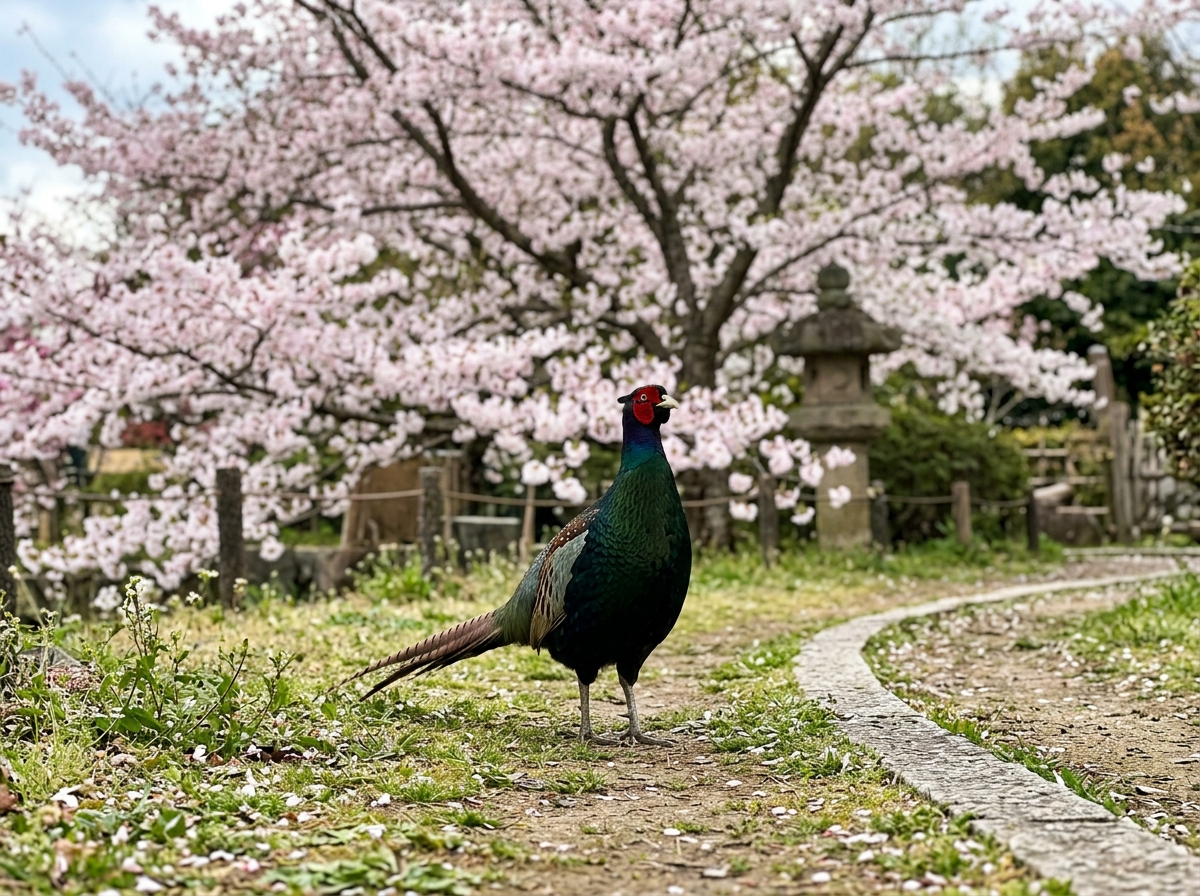
The kiji has deep roots in Japanese culture that go back centuries, well before its 1947 designation. It's native exclusively to Japan, which makes it a genuinely fitting national symbol. Unlike many other birds that might migrate through or share their range with neighboring countries, the green pheasant lives throughout Honshu, Shikoku, and Kyushu and is found nowhere else naturally in the world. That endemism alone gives it a strong claim to represent the country.
In traditional Japanese art, the kiji frequently appears alongside sakura (cherry blossoms) as a classic springtime pairing in the "bird-and-flower" painting tradition. The Saint Louis Art Museum's collection includes dishes with exactly this design: a green pheasant set against flowering cherry in a landscape. That pairing has been a staple of Japanese visual culture for centuries.
The bird also carries folkloric weight. Many people in Japan have long claimed that kiji are sensitive to earthquakes and will cry out before tremors, a belief that speaks to how closely the bird has been observed and woven into everyday Japanese life. Whether the science fully supports that is debated, but the folk belief itself shows how embedded the kiji is in the cultural imagination.
The green pheasant has also appeared on Japanese currency. The Japan Times notes a connection between kiji imagery and banknote design, reinforcing its role as a widely used national symbol beyond just an ornithological label.
How it became the national bird in 1947
The year 1947 is consistently cited across multiple sources as the year the green pheasant was formally named Japan's national bird, why is the green pheasant Japan's national bird? The selection was made by the Japanese Ornithological Society, the country's leading professional organization for bird science, rather than through a parliamentary process or government ministry.
The timing, just after World War II, is significant. Japan was going through a period of rebuilding national identity, and choosing a bird that was uniquely Japanese, beautiful, and already deeply embedded in art, literature, and folk culture would have made natural symbolic sense. The kiji wasn't a new symbol being invented; it was an existing cultural touchstone being formally acknowledged.
It's worth noting that Japan's approach here isn't unusual globally. Many countries have national birds that were chosen by ornithological societies, conservation organizations, or public votes rather than by legislative act. If you browse other national bird profiles on this site, you'll find that the line between "official" and "commonly recognized" is blurry for quite a few nations.
What to know about the green pheasant itself
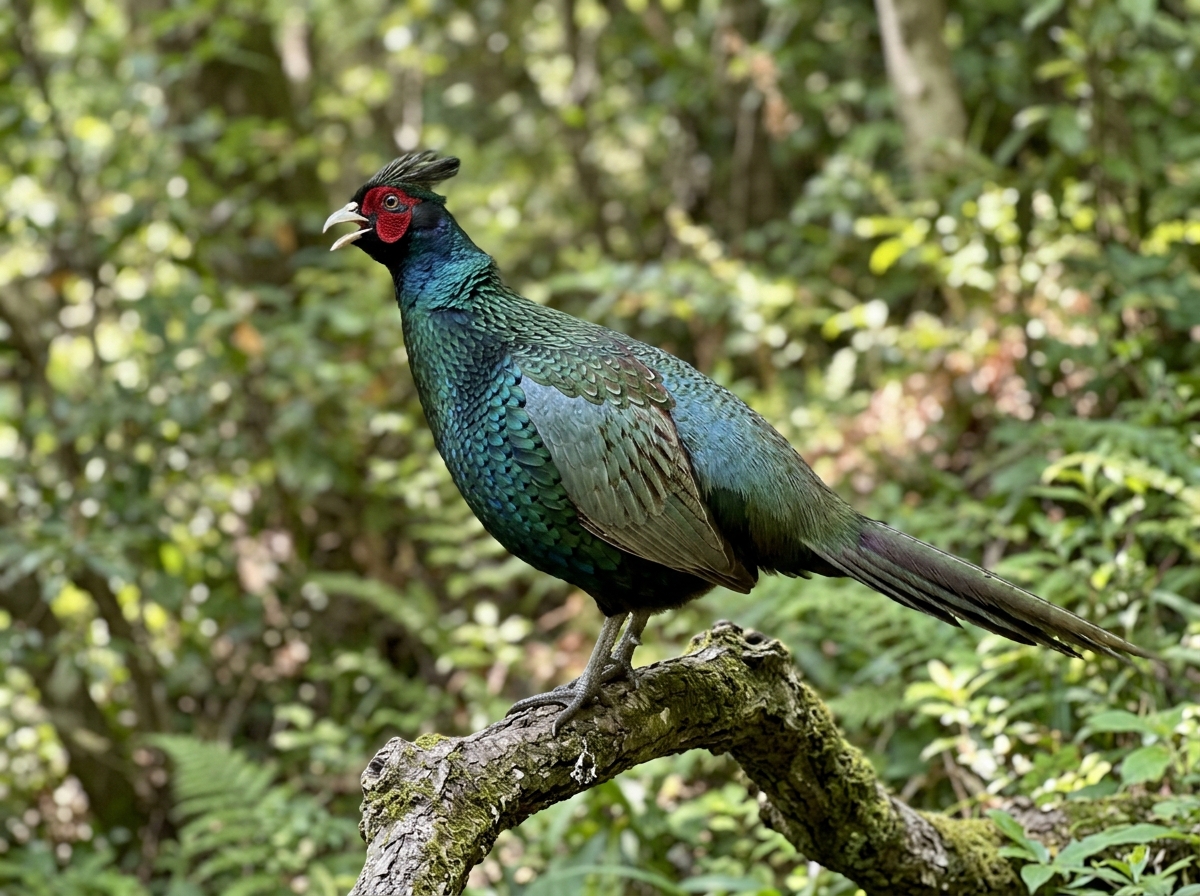
The green pheasant is a striking bird. The male is primarily metallic green, which is the feature that gives it its name and makes it immediately recognizable. It's in the same genus as the common pheasant (Phasianus), but its coloring is distinctly different and more vivid.
- Scientific name: Phasianus versicolor
- Japanese name: キジ (kiji), written 雉
- Range: Endemic to Japan, found throughout Honshu, Shikoku, Kyushu, and some smaller islands
- Diet: Omnivorous, eating seeds, berries, insects, and small animals
- Distinctive feature: The male's call is described as very distinctive and is well known to people in Japan
- Cultural status: Appears in traditional art, folklore, and banknote imagery
- Game bird: The kiji is also a traditional game bird and has been used in Japanese cuisine for centuries, a dimension explored in Japanese culinary literature
Because the green pheasant is endemic to Japan, it's a bird that most visitors to rural or semi-rural Japan can actually spot. It's not a rarified, mythological symbol that exists only in paintings. You can see kiji in fields, forest edges, and along roadsides in the Japanese countryside, which makes it a practical and accessible emblem, not just a ceremonial one.
Green pheasant vs. common pheasant: a quick comparison
People sometimes confuse the green pheasant with the common pheasant (Phasianus colchicus), especially since both species are in the same genus. Here's how they compare on the key points that matter for identification and context:
| Feature | Green Pheasant (Japan's national bird) | Common Pheasant |
|---|
| Scientific name | Phasianus versicolor | Phasianus colchicus |
| Native range | Japan only (endemic) | Central Asia, widely introduced globally |
| Male plumage | Primarily metallic green | Brownish with green head, red wattle |
| National symbol | Japan's national bird | Not a national bird |
| Status in Japan | Native, widespread | Not native |
The green pheasant is the one to focus on if Japan is your subject. The common pheasant is the bird most Westerners picture when they think "pheasant," but it's not the Japanese national bird and is not native to Japan.
Where to go from here
If you want to verify or dig deeper, here are practical starting points:
- Osaka Tennoji Zoo's species page on the "Japanese (Green) Pheasant" explicitly identifies it as Japan's national bird and provides solid educational content on the bird's biology and characteristics.
- Encyclopaedia Britannica's entry on the green pheasant gives a clear scientific description and confirms the "mainly metallic green" appearance of the male.
- The Government of Japan's Highlighting Japan publication (May 2023) is the most authoritative source for understanding why the national-bird status is widely used but not legally designated, worth reading if you need that nuance for academic writing.
- Japan's Biodiversity Center (biodic.go.jp) maintains technical documentation on Japanese bird species, including banding manuals, useful for anyone wanting species-level verification from a government-linked scientific source.
- The Japan Times has published accessible articles on the kiji in both cultural and culinary contexts, good reading if you want the cultural story rather than the scientific one.
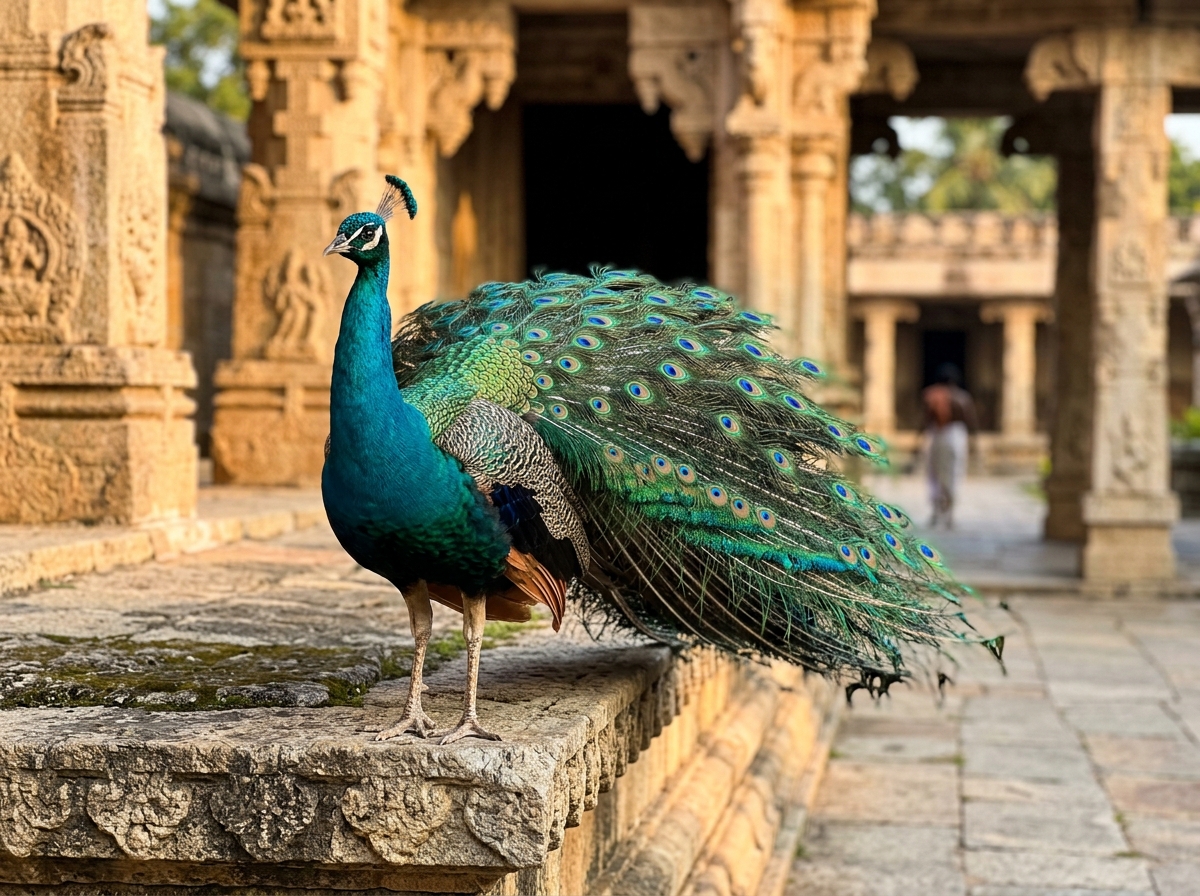
If you're exploring national bird symbolism more broadly, it's interesting to compare Japan's choice with other Asian nations. India's national bird, the peacock, is another good point of comparison since it's a pheasant-family bird chosen for its visual beauty and deep cultural roots, with its own history of official vs. traditional recognition. National bird designations across Asia often reflect this interplay between cultural tradition and formal recognition. country whose national bird is the peacock
The short version: Japan's national bird is the green pheasant, the kiji, chosen in 1947 by the Japanese Ornithological Society. It's endemic to Japan, steeped in art and folklore, and recognizable across the country. The designation isn't backed by a government law, but it's universally accepted and has been for nearly 80 years. That's as settled as national bird questions get.