
Benjamin Franklin wanted the turkey to be the national bird of the United States, and it’s commonly summarized as the answer to who wanted the turkey to be the national bird. That is the short answer, and it comes from a letter he wrote to his daughter Sarah Bache on January 26, 1784. But the full story is more nuanced than the version that gets passed around every Thanksgiving, so it is worth slowing down and looking at exactly what Franklin wrote, where you can find it, and what he was actually talking about.
What Did Ben Franklin Want the National Bird to Be?

Marcus Chen
23 Mar 2026
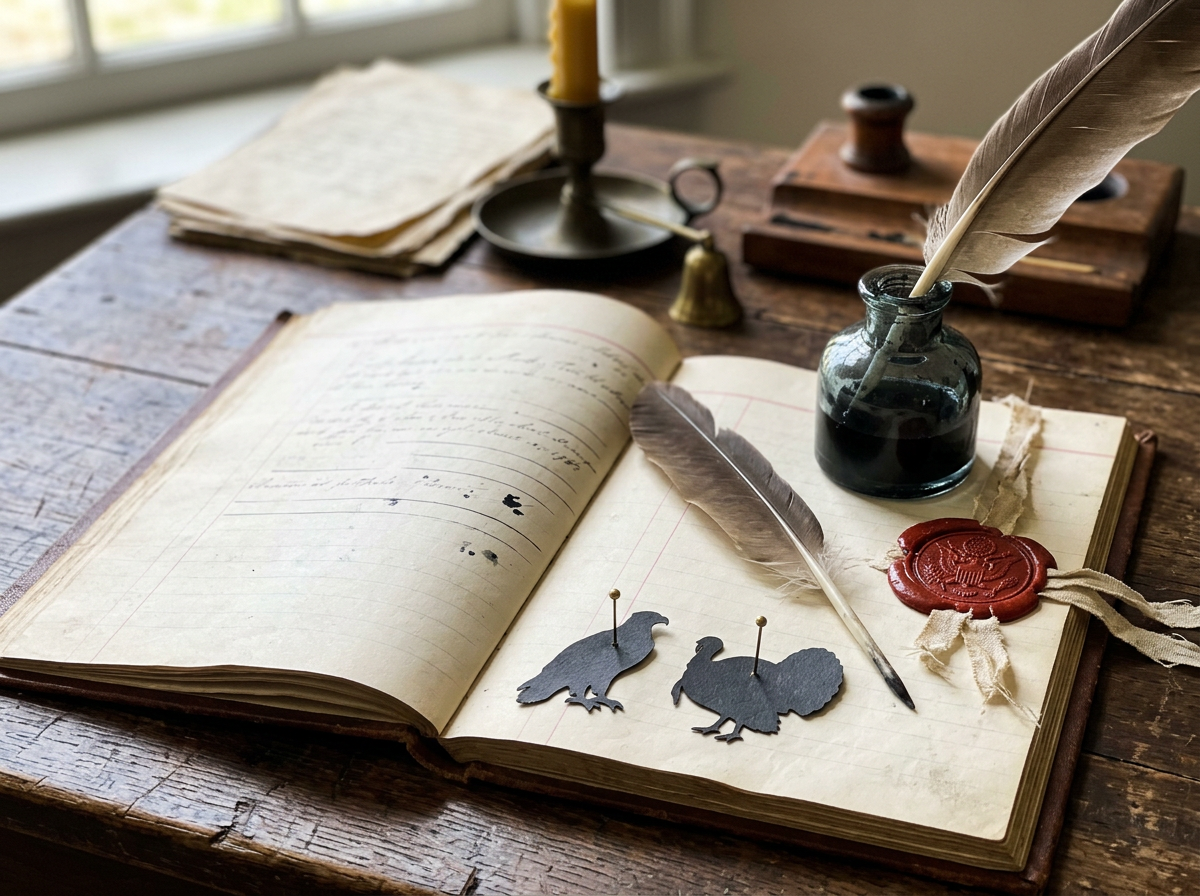
Franklin's proposed bird: the turkey
In his 1784 letter to Sarah Bache, Franklin compared the bald eagle unfavorably to the wild turkey. He did not submit a formal proposal to Congress or write a policy document. What he did was criticize an emblem used by the Society of the Cincinnati, a fraternal order of Revolutionary War officers, and argue that the figure on their badge looked more like a turkey than an eagle anyway. He was not upset about this.
His exact words, as transcribed on Founders Online (the National Archives' digital archive of Founding-era documents), include this line: "I am on this account not displeased that the Figure is not known as a bald eagle, but looks more like a turkey." He followed that up with the passage most people remember: "For in Truth the Turkey is in Comparison a much more respectable Bird, and withal a true original Native of America."
The Library of Congress independently transcribed the same letter as part of its "Benjamin Franklin: In His Own Words" exhibit, and the wording matches. Both sources include the "Turk'y" spelling Franklin used, which is a useful detail when you are trying to confirm you are reading an authentic transcription rather than a paraphrase.
Where the letter comes from and how to verify it

The original document exists in multiple versions: an autograph letter draft, a transcript, and a press copy. Founders Online notes that there are discrepancies between these versions and flags the possibility that William Temple Franklin, Benjamin's grandson, may have altered parts of the text when he later published collected papers. This is worth knowing because it means the letter you read online may not be word-for-word identical to what Franklin actually put on paper.
There is also a detail that rarely makes it into popular retellings: according to reporting from Live Science, the Franklin Institute has called the "turkey as national bird" story a myth, partly on the grounds that Franklin apparently never sent this letter to his daughter. It was a private draft. So when people say Franklin "proposed" the turkey, they are technically describing a private opinion he expressed in an unsent letter, not an active political argument he made publicly. what is america's national holiday bird
Harvard's Declaration Resources Project frames it similarly, characterizing the national turkey story as a popular myth that circulates especially around Thanksgiving. The core claim (Franklin wrote favorably about the turkey and critically about the eagle) is real and documented. The framing that he formally lobbied for the turkey as a national symbol is not supported by the historical record.
To verify the original source yourself, here are the three best places to look:
- Founders Online (founders.archives.gov): Search for "Franklin to Sarah Bache, 26 January 1784." You will find the full letter with editorial notes that flag version discrepancies. This is the National Archives' own digital archive and the most authoritative starting point.
- Library of Congress exhibit transcript: The "Benjamin Franklin: In His Own Words" exhibit at loc.gov includes an independent transcription of the same passage, which lets you cross-check the key wording.
- National Archives blog ("Talking Turkey" annotation): This annotation directly quotes the turkey/eagle passage and identifies where it sits within the broader Papers of Benjamin Franklin collection.
Why Franklin preferred the turkey: the symbolism behind his argument
Franklin's preference was not random. He built a case based on character and origins. In the same letter, he criticized the bald eagle as a bird of poor moral character, pointing out that it steals fish from other birds rather than hunting for itself. He described it as not "a proper emblem for the brave and honest Cincinnati of America." In other words, he thought the eagle's behavior set a bad example for a society meant to honor military virtue.
By contrast, Franklin described the turkey as a "true original Native of America," which mattered to him as a point of authenticity. The wild turkey was indigenous to North America in a way the bald eagle's symbolism was not. He also called the turkey a "much more respectable Bird," a phrase that sounds odd today but was a genuine claim about the turkey's independence and courage when confronted. Wild turkeys, unlike the scavenging eagle Franklin described, hold their ground.
His argument was rooted in the political and moral atmosphere of post-Revolutionary America, where debates about republican virtue were serious and ongoing. Franklin was 78 when he wrote this letter, and his criticism of the Cincinnati reflected a broader concern about aristocratic trappings in the new republic. The bird comparison was part of that larger argument, not a standalone ornithological opinion.
What the U.S. actually chose and when it became official
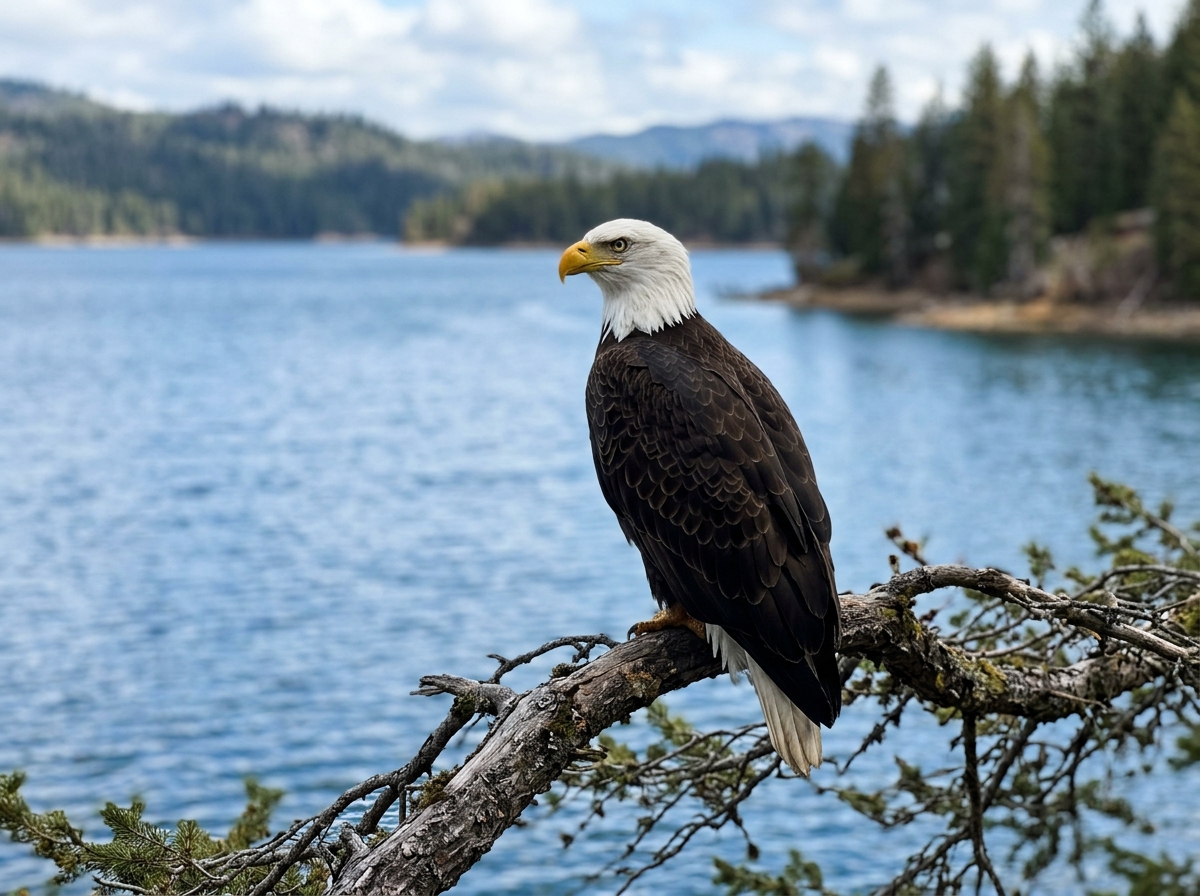
The bald eagle became associated with the United States long before Franklin wrote his letter. Congress adopted the Great Seal of the United States on June 20, 1782, depicting a bald eagle clutching an olive branch in one talon and a bundle of arrows in the other. That seal, and the eagle on it, became the dominant national emblem.
Here is something that surprises most people: the bald eagle was not officially designated as the national bird by law until December 2024. Public Law 118-206, signed by President Biden on December 24, 2024, formally amended Title 36 of the U.S. Code to make the designation statutory. Before that, the bald eagle's status as national bird was a matter of tradition and convention tied to the Great Seal, not a legal designation. The Congressional Research Service had noted this gap for years, observing that despite centuries of use, there was no law on the books making it official.
Franklin's letter, written in January 1784, came about two years after the Great Seal was adopted. By that point the eagle was already entrenched. His private criticism of it had no apparent effect on public policy, and there is no evidence it was part of any broader campaign to change the national symbol.
Franklin's bird vs. America's bird: a quick comparison
| Feature | Turkey (Franklin's preference) | Bald Eagle (Official national bird) |
|---|---|---|
| Franklin's characterization | "A much more respectable Bird" and "true original Native of America" | "Bad moral character," steals food, not a proper emblem |
| Origin of symbolism | Private letter to Sarah Bache, January 26, 1784 | Great Seal of the United States, adopted June 20, 1782 |
| Context of the argument | Criticism of the Society of the Cincinnati's emblem | Congressional adoption of a national seal |
| Formal proposal? | No (unsent private letter, personal opinion) | Yes (legal designation via Public Law 118-206, December 2024) |
| Status today | Popular historical footnote, Thanksgiving tradition | Official national bird of the United States by law |
How to research national-bird claims without getting misled
The Franklin turkey story is a good example of how a real historical fact can get stretched into something slightly inaccurate through repeated retelling. Franklin did praise the turkey. He did criticize the eagle. But he did not formally propose a national bird, and the letter in question may not have even been sent. Knowing the difference between "Franklin wrote this privately" and "Franklin campaigned for this publicly" matters if you are trying to be accurate. what was the national bird before the bald eagle
When researching national bird histories for any country, the same principle applies: trace the claim back to a primary source before repeating it. Here are practical steps that work whether you are investigating the U.S. bald eagle, researching what came before it, or looking into the selection stories behind other nations' bird emblems.
- Start with government or institutional archives. For U.S. history, Founders Online and the Library of Congress are the first stops. For other countries, national archives or parliamentary records are equivalent.
- Check whether the source is a primary document (the actual letter, law, or decree) or a secondary summary. Summaries introduce errors. Always try to get to the original.
- Look for editorial notes on primary documents. Founders Online, for example, includes notes about manuscript discrepancies and possible alterations. Those notes tell you how reliable the transcription is.
- Check the Congressional Research Service (CRS) for U.S. legal designations. The CRS distinguishes between longstanding tradition and actual statutory designation, which is exactly the distinction that matters for the bald eagle story.
- When a claim feels like a fun myth (such as a Founding Father secretly wanting a different national symbol), look for the Harvard, Smithsonian, or institutional fact-check. Organizations like Harvard's Declaration Resources Project and the Smithsonian have done the primary-source work and publish accessible summaries.
- Cross-reference at least two independent transcriptions before quoting exact wording. The "Turk'y" vs "turkey" distinction in Franklin's letter is a small example of how wording varies across versions.
If you are exploring this topic as part of a broader interest in national bird histories, it connects naturally to questions about how the U.S. selection process worked, what symbolic criteria different nations use when choosing a bird emblem, and why the bald eagle's official legal status took until 2024 to be formalized. Those threads are worth following separately, because each one has its own set of primary sources and its own layer of myth that needs untangling.
The bottom line: Franklin wanted the turkey, said so privately in a 1784 letter, made a genuinely thoughtful argument for it rooted in American identity and republican virtue, and had absolutely no effect on the outcome. The bald eagle won in 1782 before Franklin put pen to paper, and it became the official national bird by law in December 2024. Both facts are worth knowing, and both are easy to verify if you go straight to the source.
FAQ
Did Ben Franklin ever publicly propose the turkey as the national bird of the United States?
No. The turkey preference comes from a private letter draft to his daughter Sarah Bache, not from a submitted petition or a public policy statement. The idea that he “proposed” it in a formal way is a later retelling of a private opinion, and it conflicts with how the historical record describes his actions.
Is the “turkey as national bird” story accurate, even if it’s called a myth?
Partly. Franklin did write favorably about the turkey and critically about the bald eagle in that 1784 correspondence. What’s overstated is the claim that he tried to change the country’s official symbol, especially since the evidence suggests the letter was not necessarily sent and that it did not influence public policy.
Why do different versions of Franklin’s letter sometimes disagree?
Because the original material survives in multiple formats, including a draft and later publication copies. Founders Online flags discrepancies among versions and notes the possibility that William Temple Franklin, Benjamin’s grandson, may have altered parts when compiling later papers, so the wording you see online may not match what Franklin first wrote word for word.
What detail should I check to confirm I’m reading a trustworthy transcription?
Look for Franklin’s characteristic spelling choices, such as his use of “Turk’y,” which appears in more than one independent transcription. That kind of consistency is a useful sign that you are reading a transcription closer to the historical text rather than a paraphrase.
If the Great Seal was adopted in 1782, what did Franklin’s 1784 letter have to do with the national bird?
By 1784, the bald eagle was already entrenched as the dominant national emblem because of the Great Seal. Franklin’s criticism therefore did not come from a blank slate, and it helps explain why his private argument did not translate into a change in national symbolism.
Did Congress or the president ever formally make the bald eagle the national bird before 2024?
Not by statute. The article’s key point is that the bald eagle’s national status was long treated as conventional, tied to the Great Seal, until Public Law 118-206 amended Title 36 of the U.S. Code in December 2024 to make the designation legal.
What exactly was Franklin criticizing when he mentioned the turkey and the eagle?
He was commenting on an emblem used by the Society of the Cincinnati, specifically the badge figure that looked like it could be a turkey rather than a bald eagle. His complaint was about emblem symbolism and its moral messaging, not about birds generally or wildlife policy.
What was Franklin’s reasoning for preferring the turkey over the eagle?
He argued from moral character and authenticity. In the same letter he contrasted the bald eagle’s behavior, as he described it, with what he saw as the turkey’s independence and its indigenous status to North America, and he linked the bird comparison to republican virtue concerns.
If Franklin didn’t send the letter, does it still count as “what he wanted”?
It counts as what he privately preferred or thought at the time, but it does not count as a campaign or a formal effort to change national symbols. “Wanted” is accurate as a description of personal opinion in that correspondence, not as evidence of political action.
Next Article
What Is America’s National Holiday Bird? Answer
Discover America’s national bird most tied to patriotic symbolism, plus its history and common confusion with the bald e