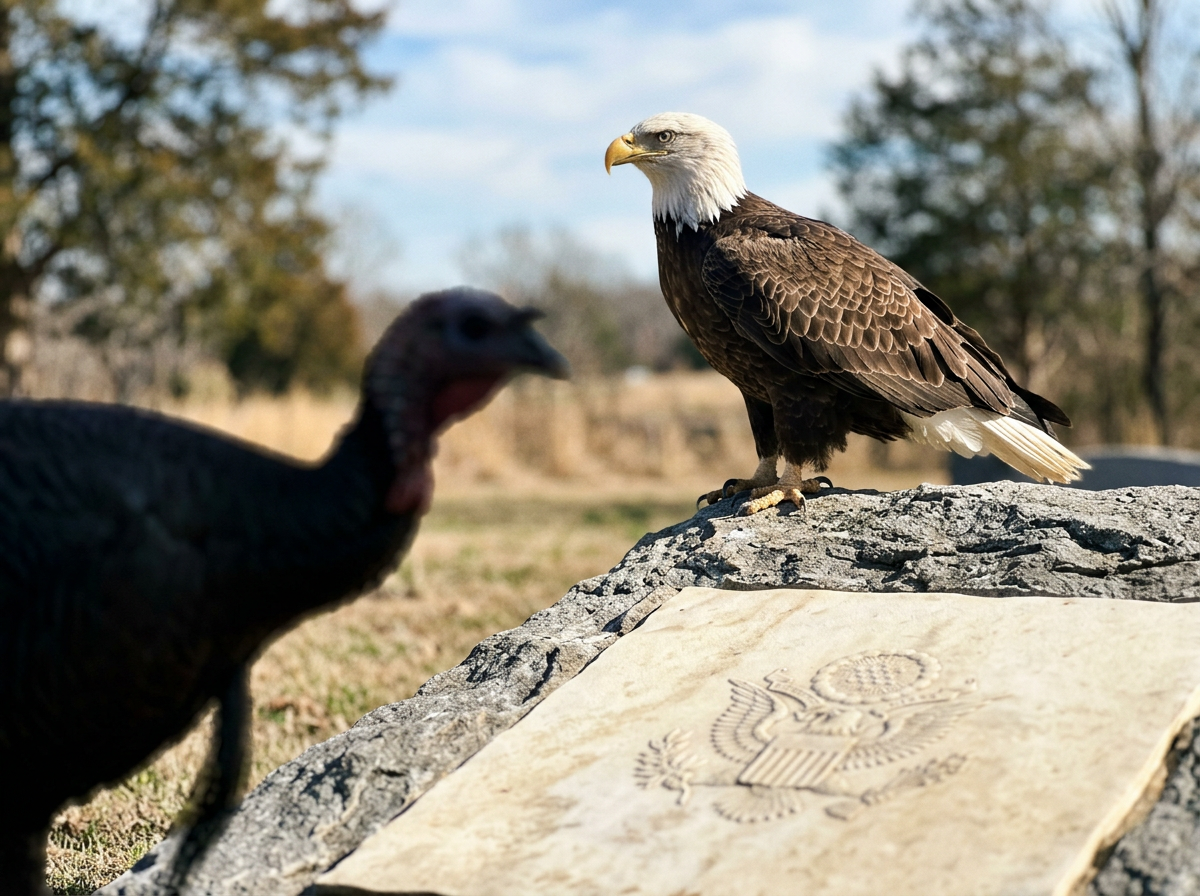
The short answer: it was never the national bird
The turkey has never been the official national bird of the United States. As of December 2024, that title belongs to the bald eagle, which President Joe Biden formally designated through Public Law 118-206. What surprises most people is that even before that law, the bald eagle had never been officially codified in U.S. law as the national bird, despite appearing on the Great Seal since 1782. So when you hear someone say the turkey "almost" became the national bird, you're dealing with a story that's part history, part legend, and worth unpacking carefully.
The main name you'll see: Benjamin Franklin
Benjamin Franklin is the person most commonly cited when people ask who wanted the turkey to be the national bird. He is the source of this story, but the details matter a lot here because what he actually said is frequently misquoted or overstated.
Franklin never publicly proposed the turkey as the national bird. He never submitted a petition, lobbied Congress, or formally advocated for it in any official capacity. The connection comes from a private letter he wrote to his daughter Sarah Bache on January 26, 1784, after the Great Seal had already been adopted. In that letter, Franklin expressed disappointment with the eagle design on the seal, writing that the bird depicted looked more like a turkey to him, and that he actually wouldn't have minded if it were a turkey. He called the bald eagle a bird of "bad moral character" because it steals fish from other birds. He praised the turkey as a more respectable bird, calling it "a true original Native of America" and noting it was courageous enough to attack a British grenadier.
That letter is real and well-documented. The problem is that people over the centuries have stretched it into a claim that Franklin formally lobbied for the turkey as the national bird, which the historical record simply does not support. He made a witty, pointed observation in private correspondence, not a formal proposal.
Anyone else? Other advocates or proposals
Beyond Franklin, there is no documented individual or organized group on record who formally proposed the turkey as the national bird during the founding era or in any subsequent congressional debate. The turkey's candidacy, so to speak, lives almost entirely in the shadow of that one Franklin letter. You may occasionally read vague claims that "some founders" preferred the turkey, but these trace back to the same Franklin source. No competing petition, no congressional resolution, no formal advocacy campaign for the turkey as national bird has been identified in the historical record.
Why the turkey made a compelling argument
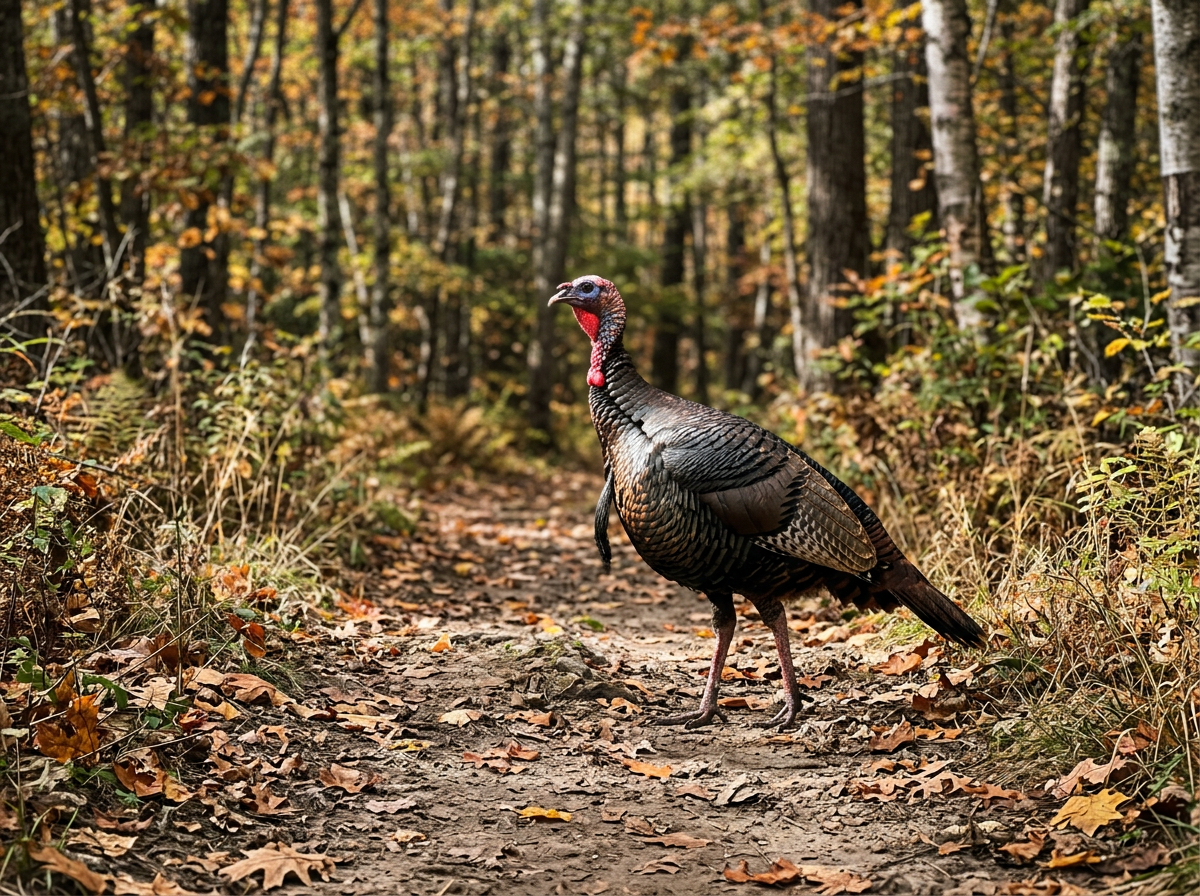
Even if Franklin's comments were informal, his reasoning was grounded in genuine symbolism that makes sense in context. Understanding why someone would argue for the turkey helps you see why the story stuck around for over 200 years.
- Native origin: The wild turkey is indigenous to North America and was already deeply tied to American life, agriculture, and survival long before the Revolution. Franklin's phrase "true original Native of America" was a real point of distinction.
- Character over appearance: Franklin's critique of the bald eagle was partly moral. He saw it as lazy and opportunistic. The turkey, by contrast, he described as brave and self-sufficient, traits that aligned with the ideals of the young republic.
- Practical familiarity: Turkeys were already woven into colonial life, from food to farming. They were not exotic or foreign. There was an argument that the national symbol should reflect something the average American actually knew and lived alongside.
- Courage under pressure: Franklin specifically noted that a turkey would not hesitate to attack a British soldier who entered its yard, which he framed as a kind of spirited independence.
These arguments carry real symbolic weight when you think about the time. The new nation was trying to define itself as something distinct from European traditions. Choosing a bird that was uniquely American, bold, and tied to the land was not a ridiculous idea. Franklin's point landed because it resonated, even if he never made it as a formal proposal.
Was the turkey ever "almost" chosen? What the selection process actually looked like
This is where the legend and the history part ways most clearly. There was no formal head-to-head competition between the bald eagle and the turkey during the design of the Great Seal. The seal went through multiple design committees starting in 1776, with various birds and symbols proposed, but the turkey was never formally submitted as a candidate.
The bald eagle was incorporated into the Great Seal in 1782, two years before Franklin wrote his letter. So when he mused that the seal's eagle looked like a turkey and that he wouldn't have minded, he was reacting to a decision that had already been made, not trying to change an ongoing debate.
As for official national bird designation, that didn't happen in law until December 2024, when Congress passed S.4610 and Biden signed it into law as Public Law 118-206. Before that, the bald eagle's status was based on tradition, the Great Seal, and widespread cultural convention, not a formal legal designation. This means the window for the turkey to be "chosen" as national bird was never really open in a formal legislative sense until very recently, and by the time it was, the bald eagle was the obvious and unanimous choice.
Clearing up confusion: turkeys and other countries
A quick clarification worth making: the country of Turkey (Türkiye) does not use a turkey as its national bird. The bird and the country share a name in English, but that is a linguistic coincidence, not a symbolic connection. Turkey's national bird is the redwing (a type of thrush). If you've come across references to the turkey appearing as a national symbol somewhere other than the United States, that would be a separate and unrelated story. The debate covered in this article is specifically about the U.S. national bird discussion rooted in Benjamin Franklin's 1784 letter.
How the bald eagle and turkey compare as national symbols
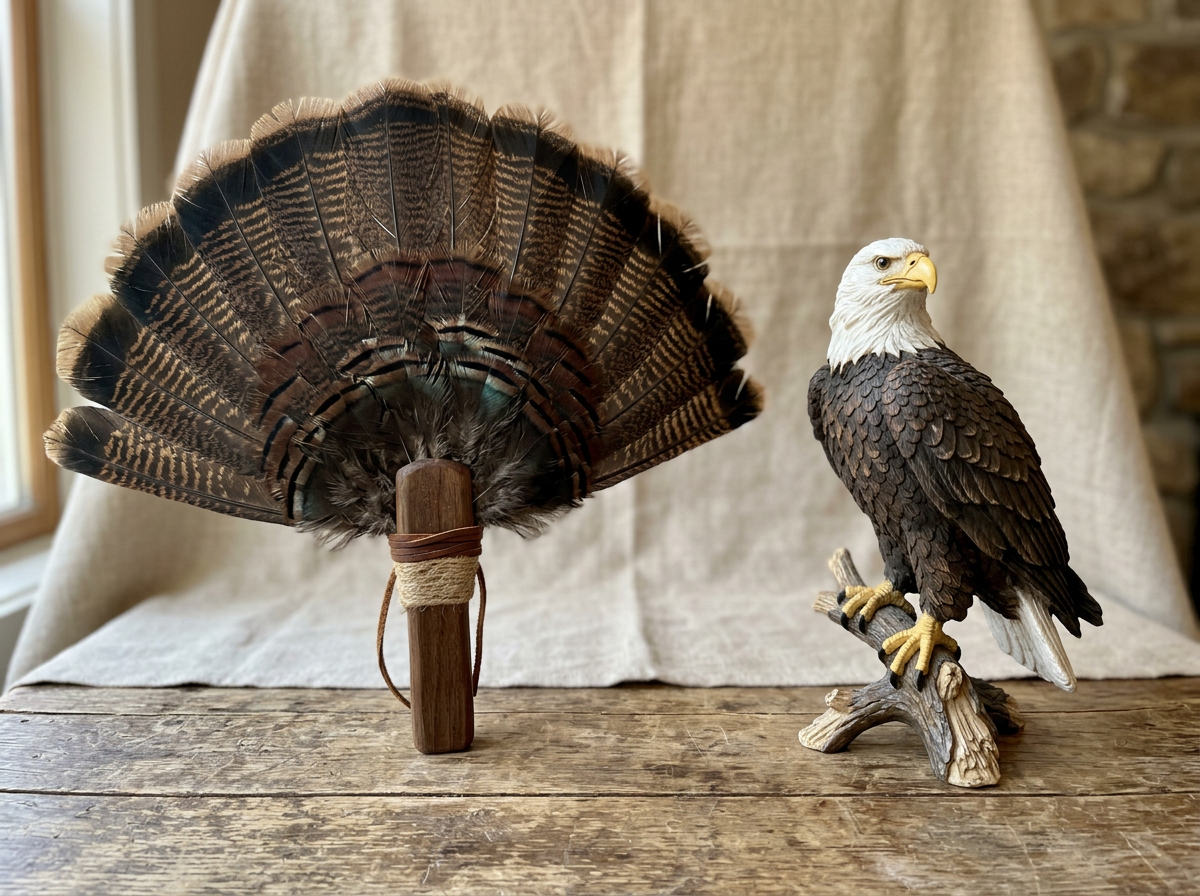
| Factor | Bald Eagle | Wild Turkey |
|---|
| Official U.S. national bird status | Yes, since December 2024 (Public Law 118-206) | No, never officially designated |
| On the Great Seal | Yes, since 1782 | No |
| Formal proposal for national bird | Yes, through congressional legislation | No formal proposal on record |
| Franklin's view (1784 letter) | Criticized as having "bad moral character" | Praised as brave and a "true original Native of America" |
| Native to North America | Yes | Yes |
| Cultural association | Power, freedom, federal identity | Thanksgiving, colonial life, agriculture |
Where to verify all of this yourself
If you want to dig into primary sources and check these claims, here are the most reliable places to look today.
- Franklin's 1784 letter to Sarah Bache: Search the Founders Online database (founders.archives.gov), run by the National Archives. You can read the full text of the letter and see exactly what Franklin said, in context, without any paraphrasing.
- Public Law 118-206 (S.4610): The full bill text is available on Congress.gov. Search for "S.4610 118th Congress" to read the actual designation language and confirm the bald eagle's official status.
- GovInfo's bald eagle feature: GovInfo (govinfo.gov) published a detailed feature on the bald eagle's history as a national symbol, including the path to Public Law 118-206. It's a well-sourced government resource.
- U.S. Fish and Wildlife Service: The USFWS website covers the bald eagle's role as a national symbol and its conservation history, which gives useful context for why the eagle carried such cultural weight.
- AP News reporting on the December 2024 signing: AP covered Biden signing the bill into law. A quick search for "Biden bald eagle national bird 2024" will bring up that reporting if you want a journalistic account of the event.
- The Great Seal of the United States (State Department): The U.S. Department of State maintains official documentation on the Great Seal, including its design history from 1776 to 1782. This is the best place to confirm that the turkey was never a formal design candidate.
If a source you find claims that Franklin "proposed" or "lobbied for" the turkey as the national bird, treat that as an overstatement. What the primary record shows is a private letter expressing a personal opinion after the decision was already made. That's a meaningful distinction, especially if you're using this for a research paper, a class assignment, or just want to get the story straight.
For broader context on how national birds are chosen and what they represent, exploring how the bald eagle came to symbolize American identity, or what other countries look for in a national bird, can give you a fuller picture of why these choices matter so much to national identity. The turkey story is really a footnote in that larger conversation, but it's a footnote that tells you a lot about how founding-era Americans thought about symbolism, character, and what it meant to be distinctly American.